• Skip to content
  • Skip to navigation
University of Notre Dame

Correll Laboratory

Aerospace and Mechanical Engineering

  • Home
  • Publications
  • People
  • Teaching
  • Art
  • Home
  • Publications
  • People
  • Teaching
  • Art
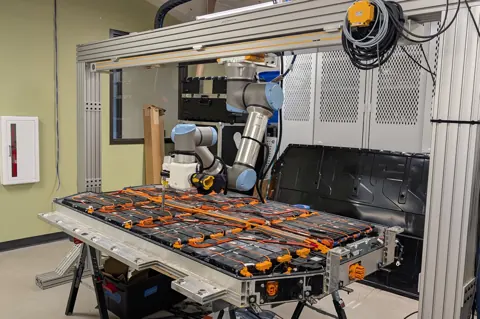
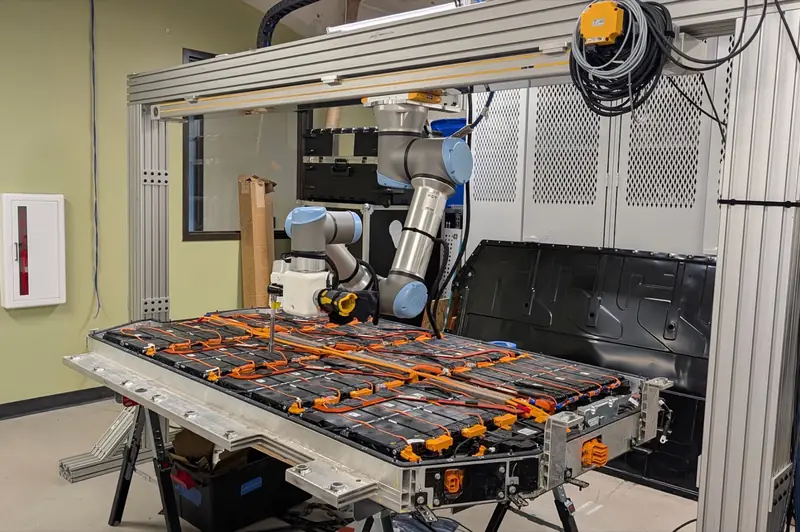
A two-armed robot working over an electric-vehicle battery pack laid open on a bench in the lab, its cells and orange high-voltage connectors exposed.

Robotic manipulation, robotic materials, and full-stack humanoids

What we work on

We investigate robotic manipulation, to give robots human-like object manipulation skills, and robotic materials — composite materials that embed sensing, actuation, computation and communication, such as robotic muscles, skin and bones. The two strands now come together in full-stack humanoid development.

Our alumni have become tenure-track professors at R1 universities, graduate students and post-docs at the world's premier research universities, and engineers and scientists at leading companies.

Read our publications Meet the team

Research areas

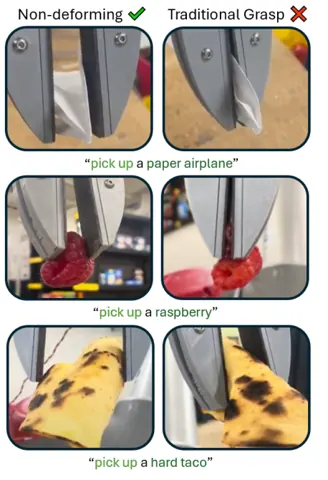
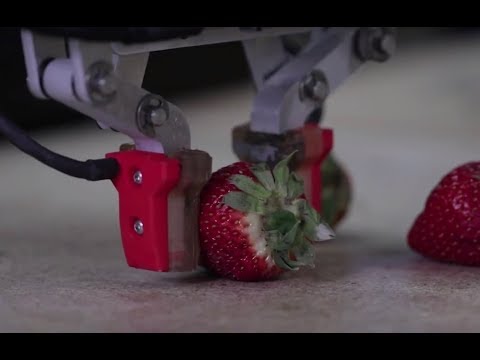
  • Six side-by-side gripper photographs comparing a force-aware grasp with a traditional one on a paper aeroplane, a raspberry and a hard taco: the traditional grasp crushes each object.

    Robotic manipulation

    Giving robots human-like object manipulation skills through perception, learning and force-aware control.

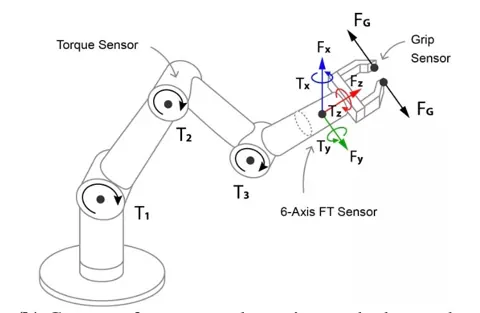
  • Diagram of a robot arm labelled with a torque sensor at each of its three joints, a six-axis force-torque sensor at the wrist and a grip sensor in the fingers.

    Robotic materials

    Composite materials that embed sensing, actuation, computation and communication — robotic muscles, skin and bones.

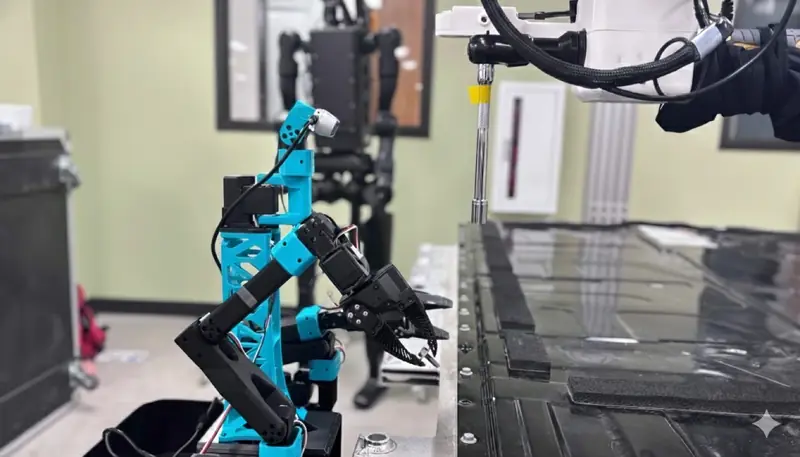
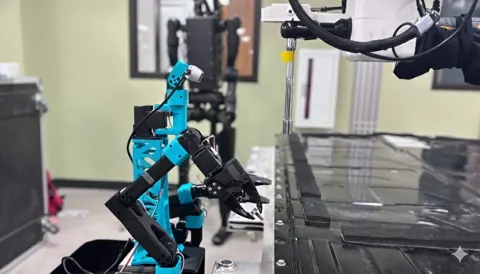
  • A small blue-and-black humanoid robot reaching toward a sheet of dark composite material on a workbench.

    Full-stack humanoids

    Bringing manipulation and robotic materials together toward capable, general-purpose humanoid systems.

Recent publications
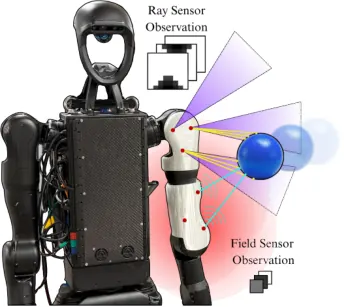
  • Figure from the paper “Egocentric Tactile and Proximity Sensors as Observation Priors for Humanoid Collision Avoidance”

    2026

    Egocentric Tactile and Proximity Sensors as Observation Priors for Humanoid Collision Avoidance

    arXiv (Cornell University)

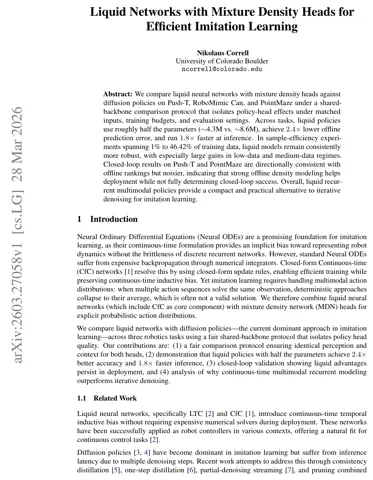
  • First page of the paper “Liquid Networks with Mixture Density Heads for Efficient Imitation Learning”

    2026

    Liquid Networks with Mixture Density Heads for Efficient Imitation Learning

    arXiv (Cornell University)

  • Figure from the paper “Robotic Agentic Platform for Intelligent Electric Vehicle Disassembly”

    2026

    Robotic Agentic Platform for Intelligent Electric Vehicle Disassembly

    arXiv (Cornell University)

  • Figure from the paper “Cutting the Cord: System Architecture for Low-Cost, GPU-Accelerated Bimanual Mobile Manipulation”

    2026

    Cutting the Cord: System Architecture for Low-Cost, GPU-Accelerated Bimanual Mobile Manipulation

    arXiv (Cornell University)

All publications

Videos

  • IROS 2020 Keynote — Robots Getting a Grip on General Manipulation

    IEEE Robotics & Automation Society

  • Advances in Robotic Materials

    Associated Press

  • Robotic hands for factory environments

    TechCrunch

  • College of Engineering
  • Aerospace and Mechanical Engineering

Correll Laboratory

Notre Dame, IN 46556 USA ncorrell@nd.edu

  • Search
  • News
  • Events
  • Visit
  • Mobile App
  • Accessibility
  • Facebook
  • X/Twitter
  • Instagram
  • YouTube
  • LinkedIn

© 2026 University of Notre Dame

  • Home
  • Publications
  • People
  • Teaching
  • Art